
Views: 0 Author: Site Editor Publish Time: 2026-07-16 Origin: Site


A simpler audio rack does not always mean a weaker system. In 2026, many installers gain more control from fewer devices. This article compares a DSP Amplifier with separate DSP and amplifier units. You will learn which setup fits different budgets, venues, workflows, and expansion plans.
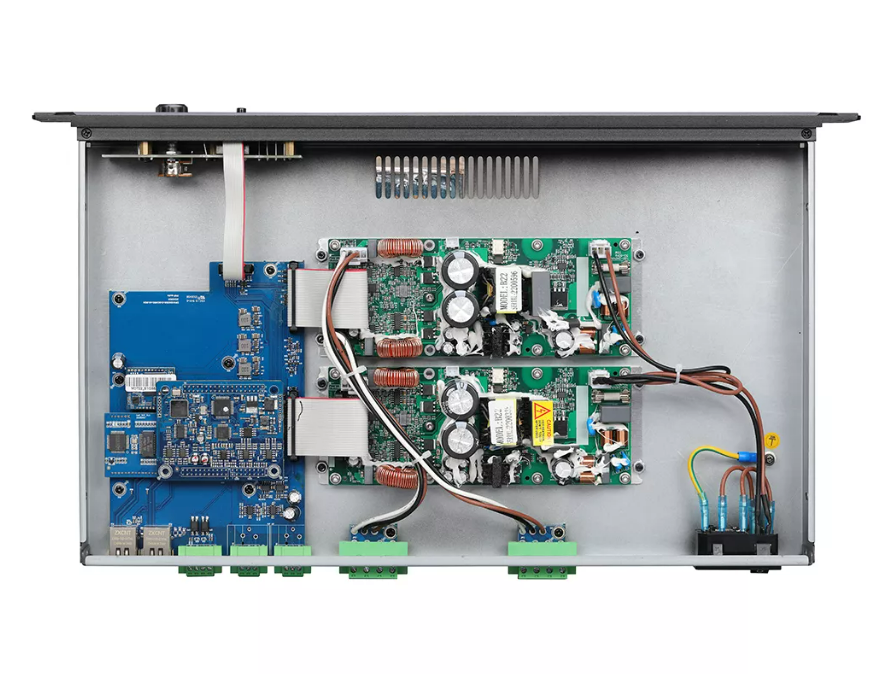
● A DSP Amplifier combines processing and power amplification in one chassis. It reduces rack space, cabling, setup time, and software complexity.
● Separate units provide more freedom for routing, upgrades, redundancy, and mixed power needs. They suit larger or customized systems.
● Sound quality depends more on tuning, gain structure, speaker matching, processing, and protection settings than equipment format.
● Integrated systems often offer stronger value for schools, hotels, restaurants, meeting rooms, worship spaces, and portable racks.
● Separate systems remain useful for stadiums, campuses, rental inventories, and projects needing independent component replacement.
● For most standard projects, a modern DSP Amplifier is the practical default. Separate equipment wins when system-wide flexibility matters most.
A DSP Amplifier places digital processing and power amplification inside one unit. The processor shapes the signal before the power stage drives loudspeakers. Common tools include EQ, crossover control, delay, filtering, limiting, dynamics, presets, and channel management.
A separate system divides these jobs. An external DSP processes the signal, then sends it to standalone amplifiers. This structure offers more component choices, but it also adds equipment, connections, and setup steps.
Integrated equipment reduces rack units and rear-panel connections. Fewer cords, signal cables, patch points, and network links make racks easier to build and inspect. Technicians can trace signal paths faster.
Separate designs need links between the processor and every amplifier input. Large projects may also require patch panels, distribution hardware, extra network ports, and more power management. These parts improve flexibility, yet increase labor.
Modern integrated amplifiers can cover most daily processing needs. Users may adjust gain, EQ, crossover points, delay, limiting, routing, presets, and speaker protection. Ethernet control and network audio options can support modern installations.
A dedicated DSP may provide broader routing. It can manage many inputs, outputs, zones, matrices, and amplifier groups. Advanced projects may also need paging priorities, room combining, control logic, or specialized processing.
One integrated platform can simplify programming. The installer manages processing, levels, limiting, and amplifier status through one environment. Staff can recall presets or review faults without switching programs.
Separate devices may use different software tools. This can increase training and troubleshooting time. A carefully designed system can still centralize control, but it needs more engineering.
An integrated unit connects processing directly to its amplifier channels. This reduces confusion between DSP outputs and amplifier inputs. It also makes speaker protection easier to document.
Separate systems let designers combine different power levels and channel counts. One processor may feed ceiling speakers, high-power subwoofers, and other output stages.
Integrated systems grow by adding complete units. Separate systems can add amplifiers while keeping the processor, provided enough outputs remain.
Integration removes inter-device cables and connectors. This can reduce faults caused by loose plugs, damaged cables, incorrect levels, or wiring mistakes.
However, one chassis contains two major functions. A failure may affect both processing and power. Separate units let technicians replace a processor or amplifier independently.
Critical venues may require backup signal paths or standby amplifiers. Smaller venues may prefer fewer devices and one complete spare.
Decision Factor | DSP Amplifier | Separate DSP and Amplifier | Typical Advantage |
Rack space | Lower | Higher | DSP Amplifier |
Cabling | Fewer links | More links | DSP Amplifier |
Setup | Faster | More steps | DSP Amplifier |
Routing | Channel-based | System-wide | Separate system |
Expansion | Add complete units | Add parts separately | Separate system |
Control | Often unified | May use several platforms | DSP Amplifier |
Replacement | Whole unit may be affected | Independent replacement | Separate system |
Project cost | Often lower | Often higher | DSP Amplifier |
Tip: Create a complete signal-flow drawing before ordering equipment, even for a simple rack.
A DSP Amplifier is a strong option when rack space is limited. It removes a separate processor and reduces support hardware. This matters in conference rooms, classrooms, hotels, restaurants, shops, and small worship spaces.
Many installations need different level, EQ, delay, and limiter settings for each zone. Integrated processing can manage these tasks by amplifier channel. Remote Ethernet control helps technicians make changes without opening the rack.
This approach suits meeting spaces, schools, hospitality venues, and background music systems. Presets can support different events, while network audio may simplify distribution.
Portable systems benefit from fast setup. An integrated rack needs fewer links and less troubleshooting. Technicians can save speaker presets and recall them for recurring events.
High-power integrated solutions can serve mains, monitors, fills, or subwoofers. The selected unit must still match speaker impedance, power demand, and cooling conditions.
Note: Verify output ratings under the intended speaker load, not only the largest published figure.
A separate DSP is often better when one processor must manage many rooms, inputs, outputs, and priorities. Large venues may need centralized routing before signals reach several amplifier racks.
This structure can support room combining, paging zones, emergency inputs, recording feeds, and several control points.
Separate components make phased upgrades easier. A venue can replace amplifiers when speaker power needs change. It can update the processor when routing or networking requirements grow.
The trade-off is more rack space and engineering work.
Major venues and rental companies may need interchangeable components. Amplifiers can move between systems, while processors remain in control racks. Independent spares can simplify repairs.
This advantage requires compatible backup equipment, saved configuration files, and clear documentation.
An integrated unit often costs less than a processor and amplifier purchased separately. Buyers must still compare the complete bill of materials. Cables, patch panels, rack hardware, network ports, power distribution, and spares add cost.
A separate system may justify a higher price when it supports major expansion or avoids full-system replacement later.
Every extra device needs mounting, wiring, labeling, testing, programming, and documentation. Complex racks also require more fault-finding time.
Integrated systems reduce these tasks. They suit repeated projects such as classrooms, meeting rooms, hotels, or retail branches. One proven rack design can serve many locations.
Separate systems need more engineering. That cost is reasonable when advanced routing or custom control is essential.
Long-term cost includes firmware support, staff training, spare inventory, replacement time, and expansion. An integrated system may be easier for local staff. A separate system may help service teams replace individual parts.
Buyers should compare ownership over several years, including downtime risks and component availability.
Tip: Request a complete bill of materials and commissioning scope before comparing supplier quotations.
Separate equipment does not automatically sound better. Final performance depends on converter quality, noise, gain structure, processing accuracy, amplifier stability, loudspeakers, room acoustics, and tuning.
A well-configured DSP Amplifier can provide clean, controlled output. A poorly tuned separate system can sound weak or damage drivers. Buyers should compare measurable performance and application fit.
Integrated designs avoid extra connections between processor outputs and amplifier inputs. This can reduce wiring errors, level mismatch, and unwanted noise.
Separate digital links can also maintain strong signal integrity. Problems occur when gain stages are set incorrectly. Low levels increase noise, while excessive levels cause clipping. Engineers should document input sensitivity and limiter thresholds.
Power amplifiers create heat. Racks need clear airflow and suitable ventilation. High temperatures may reduce output performance and equipment life.
Buyers should review limiting, short-circuit protection, thermal protection, overcurrent protection, and load stability. DSP settings must match each loudspeaker. Incorrect crossover or limiter values can damage drivers.
Integrated monitoring may show levels, temperature, channel status, and faults through one interface. Saved presets support quick recovery after accidental changes.
Separate systems allow targeted testing. Technicians can bypass the DSP, test amplifier channels, or substitute one component. Both layouts need labeled cables, backed-up files, firmware records, and maintenance logs.
A DSP Amplifier suits compact event racks. It supports rapid deployment, saved presets, fewer cables, and easier transport. This makes it practical for weddings, school events, worship services, and small concerts.
A separate system is better for large productions using complex arrays, several amplifier racks, centralized processing, or redundant distribution.
Integrated amplification is often the stronger choice. These systems need clear speech, background music, zone control, simple presets, and remote adjustment.
A compact multi-channel unit can serve several rooms or zones. Ethernet control supports central management, while network audio may reduce long cable runs.
Studios should focus on latency, noise, routing, calibration, and workflow. A dedicated processor may offer flexible monitor control. An integrated amplifier may suit fixed speaker systems where simple operation matters.
The choice depends more on routing than power alone. Teams should test the complete signal chain.
Large venues often need separate processing across many amplifier channels. Rental companies may prefer modular racks because equipment combinations change between projects.
Integrated racks remain useful for smaller packages. A mixed inventory can support routine and complex events.
A modern DSP Amplifier is the better default for most compact and multi-zone systems. It saves rack space, reduces wiring, and simplifies control. Separate equipment remains stronger for complex routing, upgrades, and redundancy. Auway Audio offers flexible DSP control, multi-channel amplification, remote management, and network-ready options. These features help users build efficient systems for venues, events, education, and commercial spaces.
A: A DSP Amplifier suits compact racks and simple control.
A: A DSP Amplifier improves tuning, protection, and consistency.
A: Integrated systems often reduce equipment, wiring, and labor.
A: Yes. They allow independent upgrades.
A: Check presets, levels, loads, network status, and temperature.
A: Choose it for complex routing, redundancy, or mixed power needs.


