
Views: 0 Author: Site Editor Publish Time: 2026-02-18 Origin: Site


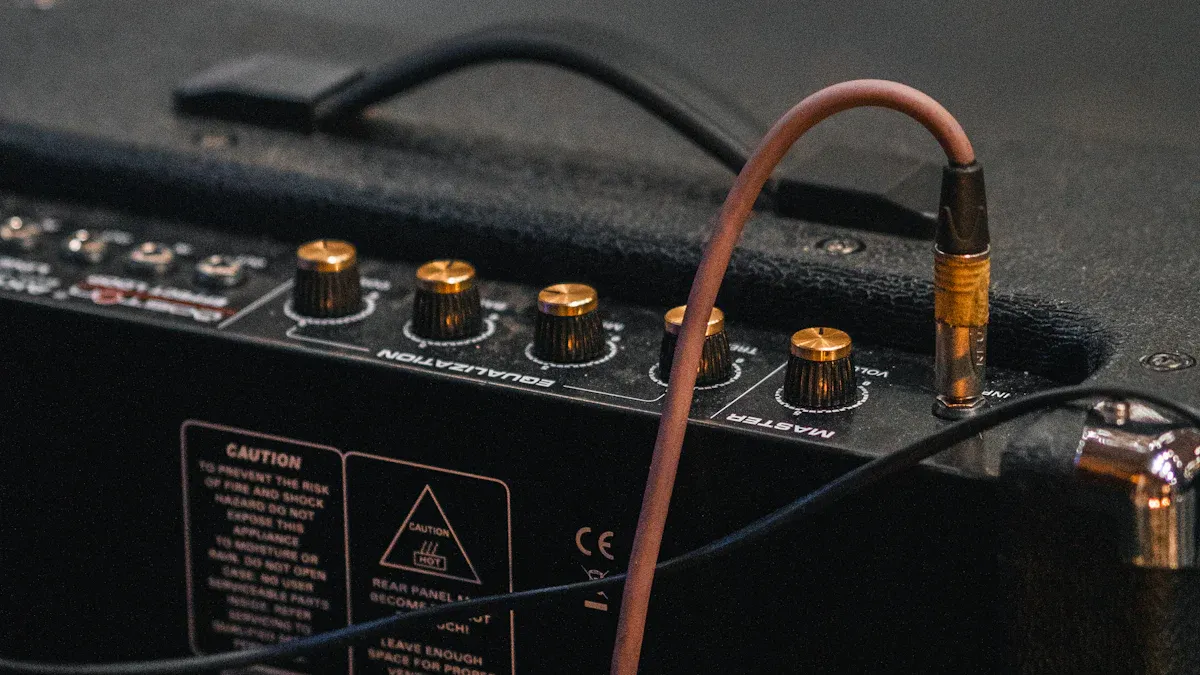
A professional power amplifier takes a weak audio signal and makes it strong enough to drive large speakers. You often find these professional power amplifiers in concerts, theaters, and public events where clear, loud sound matters.
The global market for audio amplifiers, particularly professional power amplifiers, could reach USD 7.1 billion by 2030, with most growth coming from professional settings.
The market grows at nearly 7% each year, showing how important these professional power amplifiers have become.
Many beginners think higher peak power always means better sound. You need to match your professional power amplifier to your speakers for the best results.
Professional power amplifiers boost weak audio signals to drive large speakers, ensuring clear sound in venues like concerts and theaters.
Always match your amplifier's power output to your speakers' RMS rating to prevent distortion and protect your equipment.
Understand the difference between professional and consumer amplifiers; professional models offer higher power, durability, and advanced features.
Familiarize yourself with key terms like wattage, impedance, and channels to make informed decisions when choosing amplifiers.
Consider the environment where you'll use the amplifier; different settings require different power and features for optimal sound.
Regular maintenance, such as cleaning and checking connections, helps prolong the life of your amplifier and ensures reliable performance.
Choose between analog and digital amplifiers based on your sound preference and efficiency needs; each type has its unique characteristics.
Invest in a well-built amplifier with strong cooling and protection features to avoid common issues and enhance your audio experience.
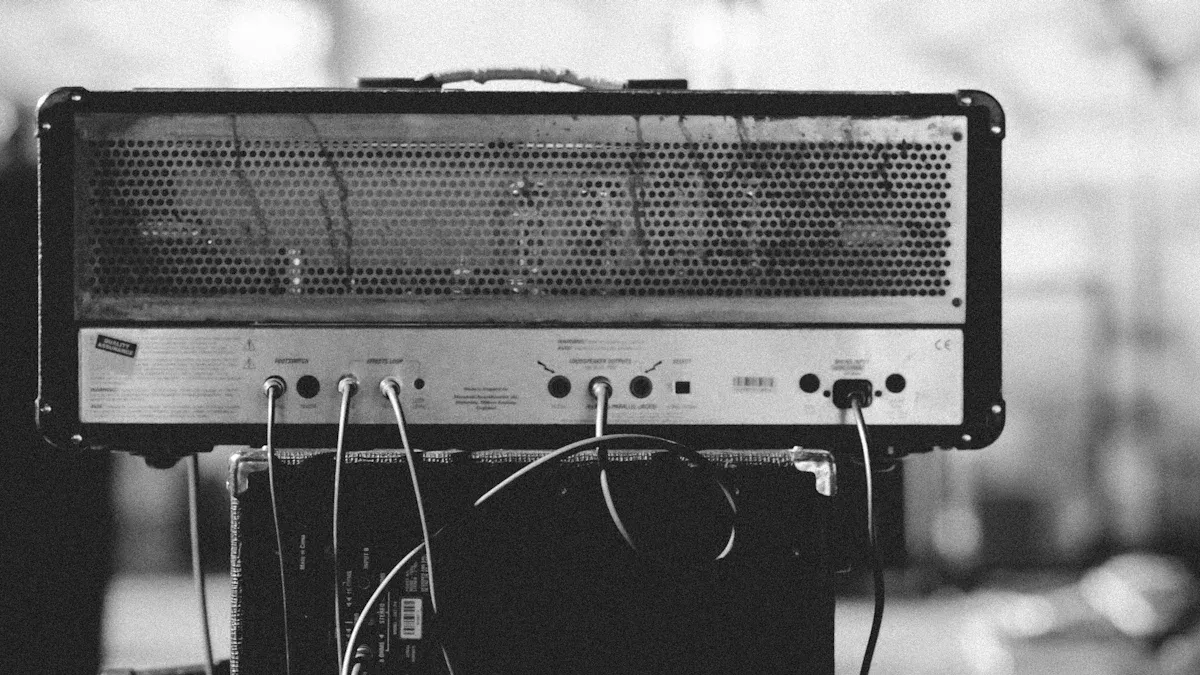
You use a power amplifier to make weak audio signals strong enough for speakers or headphones. This device sits at the end of the audio chain. It takes a small signal and boosts it so you can hear clear, loud sound in any setting. Leading audio engineering sources define a power amplifier as a device that amplifies low-power electronic audio signals to a level sufficient for driving loudspeakers or headphones. You rely on this technology in professional power amplifiers to deliver high-fidelity audio in large spaces. The main purpose is to ensure your sound system can fill a room or venue with powerful, distortion-free sound.
A power amplifier does more than just make things louder. It also keeps the sound clean and accurate. You want your music, speech, or effects to sound just as the creator intended. Professional power amplifiers help you achieve this by boosting the signal without adding unwanted noise or distortion.
Here are the primary functions of a power amplifier in an audio system:
Function | Description |
|---|---|
Signal Amplification | Increases the amplitude of audio signals to drive speakers at higher volumes without distortion. |
Sound Clarity and Quality | Ensures audio remains distortion-free, critical for live events and recordings. |
Power Delivery for Large Spaces | Provides sufficient power to project sound effectively across large venues. |
Reliable Performance | Built to handle continuous and heavy use, ideal for demanding environments. |
Advanced Features | Includes DSP capabilities for sound shaping tools like equalizers and dynamic range control. |
You also benefit from features like signal boosting, impedance matching, tone shaping, and noise reduction. These features help you get the best possible sound from your system.
You find professional power amplifiers in many places where clear, strong sound matters. These devices play a key role in live sound, broadcasting, and studio environments. Here are some of the most common applications:
Application Type |
|---|
Large-scale concert or festival venues |
Houses of worship |
Conference centers and lecture halls |
Nightclubs and entertainment venues |
Recording studios and broadcast facilities |
You might use a power amplifier at a concert to make sure everyone hears the music. In a house of worship, you use it to project speech and music to the entire congregation. Conference centers and lecture halls rely on these amplifiers for clear presentations. Nightclubs need them for powerful music that fills the dance floor. Recording studios and broadcast facilities use power amplifiers to ensure high-fidelity audio during production and transmission.
You may wonder how professional power amplifiers differ from the ones you use at home. The differences matter when you choose the right equipment for your needs.
Feature | Professional Amplifiers | Consumer Amplifiers |
|---|---|---|
Purpose | Designed for sound reinforcement, used in live settings | Limited to home use, typically for one audio source |
Durability | Built with rugged materials to withstand abuse | Less durable, designed for home environments |
Power | Higher maximum power, rated at lower distortion levels | Lower maximum power, often rated at higher distortion levels |
Fan Noise | Generally noisier due to powerful cooling fans | Quieter operation, less need for powerful fans |
Signal Levels | Can handle a wide range of signal levels | Limited capacity for signal levels |
You use professional power amplifiers when you need high output, reliability, and the ability to handle tough conditions. These amplifiers deliver more power and can run for long periods without overheating. They also offer advanced features for sound shaping and protection. Consumer amplifiers work well for home use, but they cannot match the performance or durability of professional models.
Tip: If you plan to use your amplifier in a demanding environment, always choose a professional model. You will get better sound, more power, and longer life from your equipment.
You use a power amplifier to make a small audio signal much stronger. The process starts when you send a weak signal into the amplifier’s input. The amplifier uses electric power from its power supply to boost this signal. At the output, you get a much larger signal that can drive speakers or other devices. The effectiveness of this process is measured by gain. Gain is the ratio of output to input—how much the amplifier increases the signal’s strength. You need enough gain to fill a room with sound, but you also want the sound to stay clear.
Inside a professional power amplifier, the output stage plays a big role. This stage uses output transistors to handle the heavy lifting. You might see different arrangements, such as Darlington complementary, Quasi complementary, or Compound complementary. Each setup changes how the amplifier handles current and keeps the signal stable. These choices affect how well your amplifier works in real-world situations.
You should understand three key ideas when you look at amplifier performance: gain, linearity, and efficiency.
Gain tells you how much the amplifier increases the input signal’s power. High gain means your amplifier can drive bigger speakers or fill larger spaces.
Linearity means the amplifier copies the input signal accurately. If your amplifier is linear, the sound stays true to the original. This is important for music and speech.
Efficiency shows how much of the input power turns into useful output power. High amplifier efficiency means less energy wasted as heat. For example, switching power amplifiers like Class D can reach 85-95% efficiency. Traditional Class A amplifiers only reach about 25%. You want high efficiency in professional settings to save energy and keep your system cool.
You often see amplifiers designed with a balance of gain, linearity, and efficiency. Power gain is a key measure in audio power amplifiers. It shows how well your amplifier can drive loudspeakers without wasting energy.
Note: In some situations, like satellite communications, you need to focus on efficiency because power is limited. In other cases, such as live concerts, you need both high linearity and efficiency to keep the sound clear and powerful.
You can follow the path of sound through a typical audio system step by step:
Sound Source: You start with an instrument or a voice.
Microphone: The microphone picks up the sound and turns it into an electrical signal.
Audio Interface: The signal goes to an audio interface, which boosts it and changes it into a digital format.
Digital Audio Workstation (DAW): The digital signal is processed and stored.
Audio Interface (Output): The processed signal is changed back to analog.
Speakers or Headphones: The power amplifier boosts the signal one last time so you can hear it loud and clear.
The signal flow shows how each part of the system passes the audio signal forward. The power amplifier sits near the end, making sure the sound is strong enough for everyone to hear.
Tip: Understanding the signal flow helps you set up your audio system correctly and fix problems quickly.
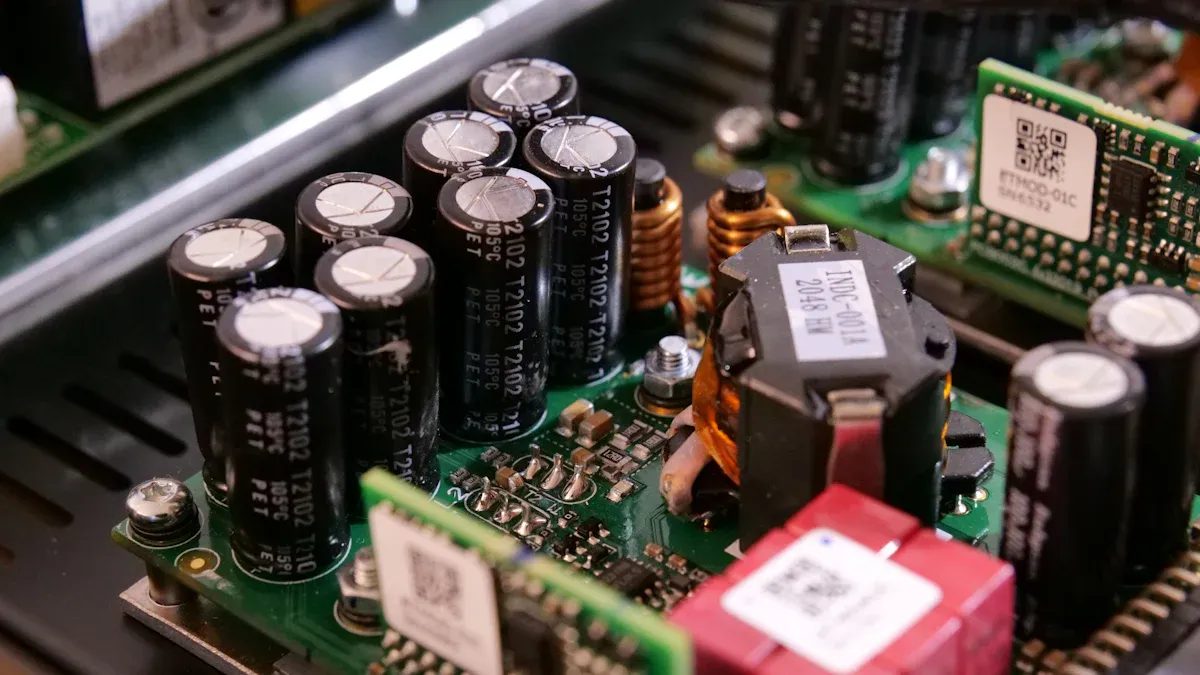
You need to know the main parts of a power amplifier before you can use it well. Each part plays a role in making sure your audio system works smoothly.
The input section receives the audio signal. You connect sources like mixers or preamps here. The output section sends the amplified signal to your speakers. You often see connectors like XLR, RCA, or 1/4-inch jacks. These connectors help you link your amplifier to other devices.
Amplifier level refers to the strength of an audio signal that is transmitted between an audio amplifier and speakers. It is essential for beginners to know that amplifiers receive a 'line level' signal at their input, which is then amplified through the amplifier's circuits to the speakers.
The power supply gives energy to the amplifier. It converts electricity from the wall into the right form for the amplifier’s circuits. You need a strong power supply to keep your amplifier running without interruptions. If your power supply fails, your audio system stops working.
Cooling systems protect your amplifier from overheating. Fans and heat sinks remove extra heat. You find cooling systems in professional power amplifiers because they handle high power levels. Good cooling keeps your amplifier safe and extends its life.
You should learn some key terms to understand how power amplifiers work. These terms help you read specifications and make smart choices.
Wattage shows how much power your amplifier can deliver. You match wattage to your speakers for the best sound. If you use too much wattage, you risk damaging your speakers. Too little wattage means weak sound.
Impedance measures resistance in your audio circuit. You see values like 4 ohms or 8 ohms. You must match the impedance of your amplifier and speakers. If you mismatch impedance, you can cause distortion or damage.
Channels tell you how many separate signals your amplifier can handle. A single-channel amplifier powers one speaker. A two-channel amplifier powers two speakers. Multi-channel amplifiers work for surround sound or large venues.
Distortion means unwanted changes in your audio signal. You want low distortion for clear sound. SNR stands for Signal-to-Noise Ratio. A high SNR means your audio signal is much stronger than background noise.
A - the symbol for amps, or amperes, which is a unit of current flow. Common prefixes are 'm', for mA (10-3 amps), and 'u', for uA (10-6 amps). AC - Alternating Current. This is electric current that periodically changes the direction in which it flows.
Definitions of amplifiers and preamps
Functions of amplifiers and preamps
Specifications to consider when choosing amplifiers
Importance of matching amplifiers with speakers
Technical terms such as voltage, wattage, and impedance
Term | What It Means |
|---|---|
Wattage | Power output of the amplifier |
Impedance | Resistance in the audio circuit |
Channels | Number of signals handled |
Distortion | Unwanted changes in the audio signal |
SNR | Signal strength compared to noise |
Understand the basic definitions of amplifiers and preamps.
Learn about the functions of these devices in audio systems.
Familiarize yourself with key specifications to consider.
Recognize the importance of matching amplifiers with speakers.
Explore technical terms that are crucial for understanding power amplifiers.
You build your knowledge step by step. You start with these terms and parts. You soon feel confident reading amplifier specs and setting up your audio system.
You will find two main types of amplifier technology: analog and digital. Analog amplifiers use traditional circuits to boost the audio signal. Digital amplifiers, sometimes called Class D, use digital signal processing to increase efficiency and control.
Digital amplifiers stand out for their high efficiency. They often reach 85% to 95% efficiency, which means they waste less energy as heat. Analog amplifiers usually operate at 30% to 60% efficiency, so they get hotter and use more power. You will notice that digital models run cooler and can be much smaller in size.
When you listen to music, you may hear a difference. Analog amplifiers often sound warm and natural. Digital amplifiers sound clean and precise, but some people describe them as a bit sterile. Digital models also keep phase alignment accurate, which helps with sound image positioning.
Here is a quick comparison:
Feature | Analog Amplifiers | Digital Amplifiers |
|---|---|---|
Efficiency | 30%–60% | 85%–95% |
Heat Output | High | Low |
Size | Larger | Compact |
Audio Fidelity | Warm, natural | Clean, sometimes sterile |
Signal Processing | Pure analog | Digital conversion |
Tip: If you want a compact, cool-running amplifier for a portable setup, choose a digital model. If you prefer a classic sound, analog might suit you better.
You will also see amplifiers divided into tube amplifiers and solid state amplifiers. Tube amplifiers use vacuum tubes to boost the signal. Solid state amplifiers use transistors and modern electronics.
Tube amplifiers create a sound that many describe as warm and magical. They often add a pleasing character to music, especially for guitarists and audiophiles. Solid state amplifiers sound more transparent and precise. They deliver higher power output and require less maintenance. Tube amplifiers need regular tube changes and can get hot. Solid state amplifiers run cooler and last longer.
Here is a table to help you compare:
Feature | Tube Amplifiers | Solid-State Amplifiers |
|---|---|---|
Sound Quality | Warm, magical | Transparent, precise |
Power Output | Lower | Higher |
Maintenance Costs | High (tube replacement) | Low, durable |
Operational Efficiency | Less efficient, gets hot | Highly efficient, runs cool |
Technology Age | Older technology | Modern, includes Class D |
User Preference | Some love 'tube magic' | Many prefer reliability |
You will find amplifier classes like class ab in both tube and solid state designs. Class ab offers a balance between sound quality and efficiency. Many professional systems use class ab for its reliable performance.
You will choose your amplifier type based on your needs. Each type fits different situations in the audio world.
Use Case | Description |
|---|---|
Live Concerts | Amplifiers power large speaker arrays, making sure sound reaches every corner of the venue. |
Event Venues & Theaters | Drive surround sound systems, helping the audience hear every detail and word. |
Broadcast & Recording | Provide steady power for studio monitors, keeping audio clear during important work. |
Public Address Systems | Used in stadiums, airports, and conference centers to send announcements over large areas. |
Nightclubs & DJ Events | Drive big speaker setups, delivering strong bass and clear music for dancing crowds. |
You will see class ab amplifiers in many live sound and event setups. Tube amplifiers often appear in music studios or with guitarists who want a special sound. Digital amplifiers work well in modern venues where efficiency and size matter most.
Note: Always match your amplifier to your application. The right choice gives you the best sound and the most reliable performance.
When you choose a power amplifier, you need to pay close attention to its power rating. This rating tells you how much continuous power the amplifier can deliver to your speakers. The most important value is the RMS rating. RMS stands for "Root Mean Square," and it shows how much power your speakers can handle over time without damage.
The RMS rating helps you match your amplifier to your speakers.
Proper matching prevents distortion and protects your equipment.
Industry studies show that about two-thirds of speaker problems come from using the wrong amplifier.
When you match the amplifier output to the speaker's RMS rating, you get about 30% less distortion at high volumes.
If you want reliable performance, always check both the amplifier's output and your speaker's RMS rating. This step keeps your system safe and sounding its best.
You will find that professional amplifiers offer many ways to connect your audio gear. Most models include both unbalanced RCA and balanced XLR inputs. RCA connectors work well for home or small setups. XLR connectors give you a secure, noise-free connection, which is important for larger events or longer cable runs.
Speaker outputs often use speakON connectors. These connectors lock in place and prevent accidental disconnections during live shows. Some modern amplifiers also feature RJ45 network ports. These ports let you control the amplifier remotely or send audio over a network using systems like Dante. With these options, you can build flexible and advanced audio setups.
If you want a digital amplifier with excellent connectivity, you can explore options like the Auway M2450 Digital Amplifier. This model supports a wide range of input and output types, making it easy to fit into any professional system.
Professional amplifiers work hard, so they need strong cooling and protection features. You will see several standard systems that keep your equipment safe:
Soft start protection prevents sudden current surges when you power up the amplifier.
DC protection cuts off the output if a DC signal appears, saving your speakers from damage.
Short circuit protection reduces the input signal if a problem occurs.
Overcurrent protection keeps the voltage and current at safe levels.
Overheat protection activates when the amplifier gets too hot.
Distortion limiters keep the input signal within a safe range.
These features help your amplifier last longer and protect your investment. When you choose a model with strong cooling and protection, you avoid many common problems and enjoy reliable sound at every event.
When you choose a professional power amplifier, you should always check its build quality. Build quality affects how long your amplifier lasts and how well it performs in tough environments. You want an amplifier that can handle the demands of live events, touring, or daily use in a venue.
Key factors that show good build quality:
Chassis Material: Look for amplifiers with metal or reinforced steel cases. These materials protect the internal parts from bumps, drops, and dust.
Component Quality: High-quality capacitors, resistors, and connectors help your amplifier run smoothly for years. Cheap parts can fail quickly and cause sound problems.
Assembly: A well-assembled amplifier has tight screws, clean solder joints, and no loose wires. This reduces the risk of failure during use.
Finish: A durable finish resists scratches and corrosion. This keeps your amplifier looking new even after many gigs.
Tip: You can spot a well-built amplifier by its weight and feel. Heavier units often use better materials and larger heat sinks for cooling.
You should also check the front and rear panels. Sturdy knobs, switches, and connectors make setup easy and prevent damage during transport. Professional amplifiers often include rack-mount designs. These let you install your amplifier safely in a rack case, which protects it from shocks and makes it easier to move.
Feature | Why It Matters |
|---|---|
Metal Chassis | Shields against impact and dust |
Quality Components | Ensures long-term reliability |
Rack-Mount Design | Eases installation and transport |
Strong Connectors | Prevents signal loss and breakage |
Durable Finish | Protects against wear and corrosion |
You should avoid amplifiers with plastic cases or flimsy connectors. These models may cost less, but they often break down faster. In a professional setting, you need equipment that works every time.
Many trusted brands, like Auway, focus on strong build quality. For example, the Auway M2450 Digital Amplifier uses a robust metal chassis and high-grade components. You can find more details and options on the Auway website.
Note: Investing in a well-built amplifier saves you money in the long run. You spend less on repairs and replacements, and you get reliable sound at every event.
You should always inspect the build quality before you buy. A solid amplifier gives you peace of mind and helps your audio system perform at its best.
You want to choose the right amplifier for your system. Start with a clear plan. Follow these steps to make sure your sound is powerful and clear:
Set Your Sound Goal
Decide how loud you want your system to be. Think about the size of your space and the number of people. For example, a concert needs more volume than a small meeting room.
Work Back from Target Volume
Calculate the peak sound pressure level (SPL) you need at the audience. Then, figure out the SPL your speakers must produce at one meter.
Find the Required Power
Use the speaker’s sensitivity rating to see how much power you need. If your speaker has a sensitivity of 95 dB at 1 watt/1 meter, and you want 115 dB at the same distance, you need more power. Each 3 dB increase doubles the power needed.
Select an Amplifier That Matches
Choose an amplifier that can deliver the peak power your speakers need. Make sure it can handle the load without distortion or overheating.
Tip: Always check the RMS rating of your speakers and match your amplifier’s output to this value. This step protects your equipment and keeps your sound clean.
Matching your amplifier to your speakers is key for great sound and long-lasting gear. You need to look at a few important factors:
Key Impedance Factor | Impact on System | Ideal Range |
|---|---|---|
Speaker Impedance | Amplifier Load | 4Ω–8Ω |
Frequency Variance | Stability | ±20% Fluctuation |
Speaker impedance tells you how much resistance your amplifier will face. Most professional power amplifiers work best with speakers rated between 4 and 8 ohms. If the impedance drops too low, your amplifier may overheat or shut down.
The RMS rating shows how much power your speaker can handle all the time. Match your amplifier’s output to this number. If you use too much power, you risk distortion or even permanent damage to your speakers. Distortion often happens when you push your system above 85 dB for long periods. If your amplifier clips within 30 minutes, you may damage the speaker’s voice coil. This problem causes about 40% of speaker failures.
Always check both the RMS rating and impedance before you connect your system.
Avoid running your amplifier at full power for long periods.
If you hear distortion, lower the volume right away.
Note: Proper matching keeps your system safe and your audio clear.
Your choice of amplifier depends on where and how you use it. Different spaces and events need different features.
Outdoor venues need strong amplifiers. You must project sound over long distances without walls to help. High-quality audio ensures everyone hears the music or speech, even at the back.
In noisy places, your amplifier must overcome background sounds and spread audio evenly.
Concert halls and theaters often use rack-mount amplifiers. These models fit into standard racks, making setup and transport easy. They also deliver steady power and clear sound for large crowds.
Recording studios need amplifiers that give precise, clean sound. You want every detail to come through without noise or distortion.
Tip: Think about your environment before you buy. Choose an amplifier that fits your space and your needs.
Professional power amplifiers give you the flexibility to handle many situations. You can find models built for outdoor events, studios, or large venues. Pick the right one, and your system will sound its best every time.
You need to set a clear budget before you buy a professional power amplifier. Prices can vary a lot, so knowing what you can spend helps you narrow your choices. You should also think about what features matter most for your needs. Some amplifiers cost more because they offer extra power, better sound quality, or advanced protection features.
Here is a simple table to help you understand the typical price ranges for professional power amplifiers:
Category | Price Range | Example Amplifier |
|---|---|---|
Entry-Level | $1,000 - $1,999 | NuPrime AMG STA - $1,750 |
Coincident Speaker Technology Dynamo 34SE MKIII - $1,799 | ||
Mid-Range | $2,000 - $2,999 | NAD C298 - $2,399 |
Odyssey Audio Stratos - $2,700/pr. | ||
High-End | $3,000+ | Quad Artera Stereo - $2,995 |
Rogue Audio Hydra - $2,995 |
You can find good entry-level amplifiers for around $1,000 to $2,000. These models work well for small venues, home studios, or practice spaces. If you need more power or want better sound quality, you might look at mid-range amplifiers. These usually cost between $2,000 and $3,000. High-end amplifiers start at $3,000 and go up from there. These models give you the best sound, the most features, and the highest reliability. You often see them in large venues, professional studios, or touring setups.
When you set your budget, remember to include the cost of other equipment. You may need new cables, racks, or even better speakers to match your amplifier. Spending a little more on a reliable amplifier can save you money in the long run. Cheap amplifiers may break down faster or fail to protect your speakers.
Tip: Always compare the features and build quality, not just the price. A well-built amplifier with strong protection features can last for years and protect your investment.
You should also think about your future needs. If you plan to expand your system, choose an amplifier that can grow with you. Sometimes, spending a bit more now means you will not need to upgrade as soon.
You do not need to buy the most expensive model to get great sound. Focus on matching your amplifier to your speakers and your space. Look for trusted brands with good reviews. If you are unsure, ask for advice from audio professionals or check user feedback online.
You can find amplifiers at many price points. Set your budget, check the features, and choose the best model for your needs. This approach helps you get the most value for your money and ensures your sound system performs well.
When you start working with power amplifiers, you may run into some common mistakes. Knowing these pitfalls helps you avoid problems and get the best results from your system.
Mistake | Explanation |
|---|---|
Underestimating Power Requirements | Choosing an amplifier that does not meet the power needs can lead to weak sound and speaker damage. |
Overlooking Cooling and Ventilation | Proper cooling is essential, especially in high-performance scenarios to prevent overheating. |
Ignoring Your Venue Acoustics | The acoustics of the venue should influence amplifier choice; powerful amplifiers may not be needed in small spaces. |
You should always check your power needs before you buy. Make sure your amplifier has enough cooling, especially if you use it for long events. Think about your room or venue size. Sometimes, a smaller amplifier works better in a small space.
Tip: Take time to plan your setup. This step saves you money and protects your equipment.
You can keep your amplifier working well for years with simple maintenance. Regular care prevents many common issues.
Clean your amplifier often to stop dust from building up.
Check all connections to make sure they are tight and clean.
Store your amplifier in a cool, dry place when not in use.
Make sure your amplifier has good ventilation to avoid overheating.
Turn off your amplifier when you do not need it.
Routine cleaning, both inside and outside, helps prevent overheating. You should also check your settings and connections before each use. These habits keep your audio system ready for any event.
Note: A little maintenance goes a long way. You protect your investment and enjoy better sound.
You can get the best sound from your amplifier by following a few simple steps.
Choose the right amplifier for your speakers. This match prevents damage and gives you the best performance.
Place your speakers carefully. Try different spots to find the best sound. Keep speakers at ear level and away from walls.
Use high-quality cables. Good wires reduce signal loss and improve your audio.
Adjust your amplifier settings. Fine-tune bass, treble, and midrange to fit your room and taste.
Keep your equipment clean. Regular cleaning keeps your sound clear and strong.
You do not need advanced skills to get great results. Small changes can make a big difference in your sound quality.
Remember: Good habits and careful setup help you get the most from your power amplifiers.
You learned the basics of professional power amplifiers. Remember these key points:
Match your amplifier with your speakers to protect your equipment.
Know the difference between professional and home amplifiers.
Check specifications like operating temperature and protection circuits for reliability.
You can always explore more about amplifiers and audio gear. For more tips and product options, visit the Auway website. Keep learning and enjoy building your sound system!
Bridging lets you combine two amplifier channels into one. You double the output power for a single speaker. You use this feature when you need more power for a large speaker or subwoofer.
You connect speakers using speaker cables and the correct output terminals. Most amplifiers use speakON, binding posts, or banana plugs. Always match the amplifier’s output to your speaker’s input for safe operation.
Your amplifier may overheat if you block its vents, use it in a hot room, or push it too hard for long periods. Make sure you keep the area around the amplifier clear and check that the cooling fans work.
A mono amplifier powers one channel or speaker. A stereo amplifier powers two channels, usually left and right. You choose mono for single speakers or subwoofers and stereo for music or movies with left and right sound.
Check the speaker’s impedance (ohms) and power rating (watts). Your amplifier should support the same impedance and deliver power close to the speaker’s RMS rating. This match prevents distortion and protects your equipment.
Yes, you can use a professional amplifier at home. You may need adapters for connections. Professional models give you more power and features, but they can be larger and louder than home amplifiers.
First, check all cables and connections. Use balanced cables if possible. Move power cables away from audio cables. If the hum continues, try plugging the amplifier into a different outlet.
You should clean your amplifier every few months. Dust the vents and wipe the exterior. Regular cleaning keeps the cooling system working and helps your amplifier last longer.


