
Views: 0 Author: Site Editor Publish Time: 2025-11-12 Origin: Site


Digital power amplifiers are evolving rapidly, driven by intelligent control, network integration, and miniaturization. These trends are reshaping the audio industry, enhancing performance, energy efficiency, and user experience.
In this article, we explore how the latest trends in digital power amplifiers are changing the landscape of amplification. You’ll learn about the role of intelligent control, network integration, and miniaturization in shaping modern amplifiers and how they meet today’s growing demands for high-performance solutions.
Intelligent control refers to the ability of digital power amplifiers to adjust their performance in real-time based on changing conditions. This is made possible by technologies like artificial intelligence (AI) and machine learning, which allow amplifiers to dynamically optimize sound quality, energy consumption, and heat management. By continuously analyzing environmental factors, intelligent control systems can enhance audio performance while reducing power usage, making them ideal for both professional and consumer applications.
The primary benefits of intelligent control include the ability to make automatic adjustments to the amplifier’s settings, ensuring optimal performance across various environments. For instance, in live sound applications, the amplifier can adjust its gain or equalization based on the acoustics of the venue. This results in superior sound quality and energy efficiency, even in complex, dynamic settings. In automotive audio systems, intelligent control can tailor the output to compensate for background noise, ensuring that the audio experience is immersive and consistent.
Benefit | Description |
Real-Time Adjustments | Optimizes sound quality, power efficiency, and heat management |
Adaptive Performance | Adjusts based on environment and usage conditions |
Automation Features | Reduces the need for manual adjustments and improves usability |
Energy Efficiency | Enhances energy savings by dynamically adjusting power usage |
AI-powered amplifiers are already being used in home audio systems, where they can adapt to different room sizes and environmental factors. In professional audio setups, intelligent amplifiers automatically adjust to varying crowd sizes, ensuring clear sound coverage throughout the venue. Machine learning is also being utilized to optimize amplifier settings for specific genres of music, ensuring the best possible listening experience at all times.
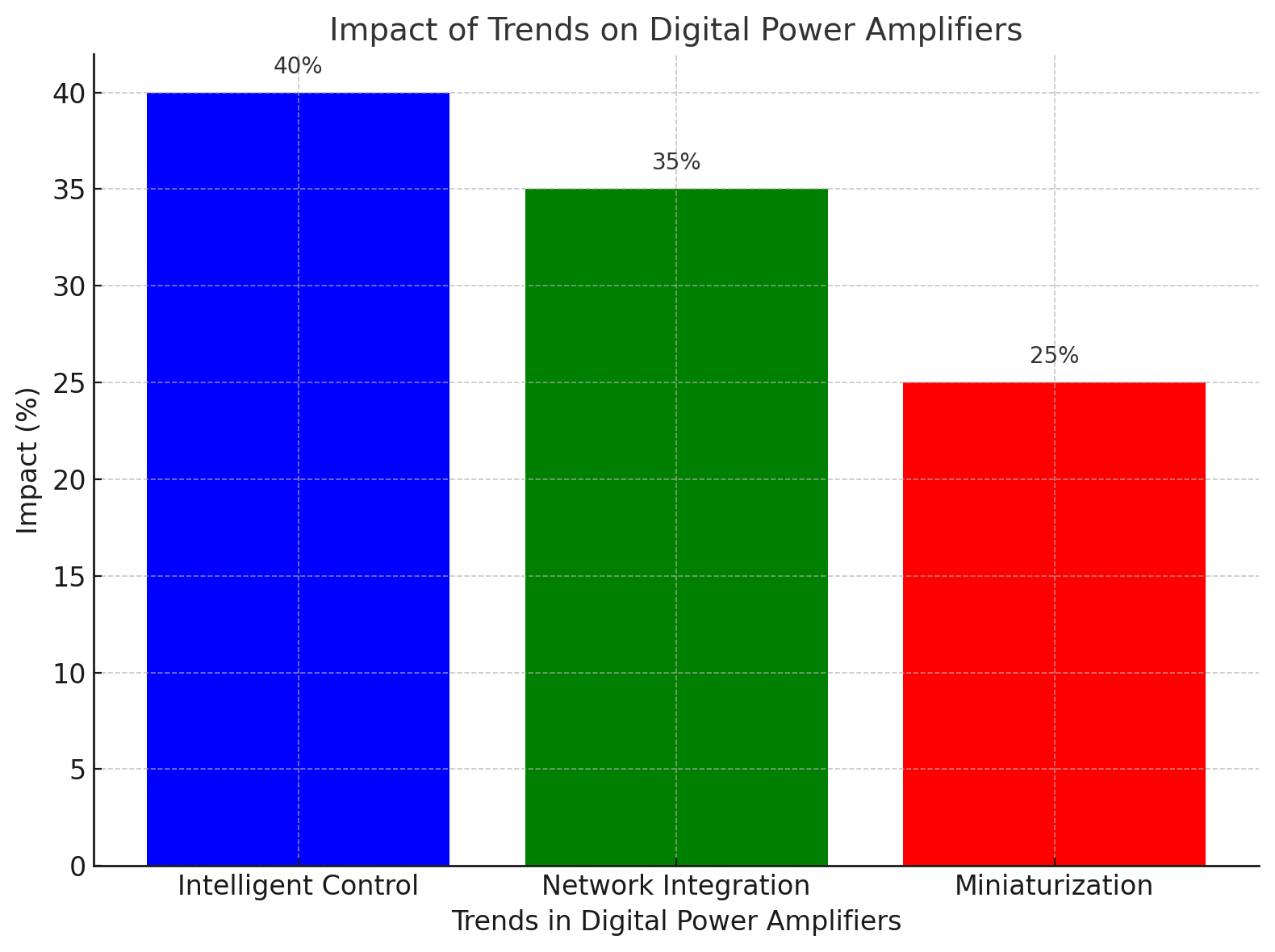
Network integration allows digital power amplifiers to communicate with other devices through wired or wireless connections. This feature is essential for modern audio systems that rely on seamless communication between various components, such as speakers, streaming devices, and smart home hubs. By embedding network integration capabilities into amplifiers, manufacturers can offer users enhanced flexibility, control, and convenience.
Network integration offers significant benefits, including the ability to remotely control and monitor the amplifier through apps or other networked devices. This is particularly valuable in both home entertainment and professional audio systems, where users can adjust settings from anywhere in the room or venue. Furthermore, networked amplifiers can be easily incorporated into smart home ecosystems or IoT networks, allowing for more intuitive and synchronized audio control.
In home audio systems, network integration enables amplifiers to connect to streaming platforms, allowing users to control playback, volume, and equalization settings from their smartphones or voice assistants. In automotive systems, amplifiers with network integration can communicate with other vehicle components, such as navigation and safety systems, providing a cohesive user experience. Additionally, professional audio systems can integrate amplifiers into venue-wide networks for centralized control, simplifying setup and management during live events.
Miniaturization refers to the trend of reducing the size of electronic components while maintaining or improving their performance. In the case of digital power amplifiers, miniaturization allows for the creation of compact, lightweight designs without sacrificing power output or sound quality. Advances in semiconductor technology, particularly the use of smaller transistors and more efficient materials, have made it possible to produce high-performance amplifiers in increasingly smaller form factors.
The primary benefit of miniaturization is the ability to create more portable and space-efficient amplifiers. Smaller amplifiers are easier to integrate into a variety of applications, from home theater systems to automotive audio setups. Miniaturized amplifiers also tend to be more energy-efficient, generating less heat and requiring less power to operate. This makes them ideal for battery-powered devices and applications where space is at a premium, such as in wearable audio technologies or compact wireless speakers.
Miniaturized digital power amplifiers are increasingly found in consumer electronics, from portable speakers to Bluetooth-enabled devices. In automotive systems, compact amplifiers are being integrated into smaller, more efficient audio setups, delivering high-quality sound while conserving space. The trend toward miniaturization also extends to wearable devices, where tiny amplifiers are embedded in fitness trackers, hearing aids, and other gadgets, providing a seamless audio experience in an ultra-compact package.
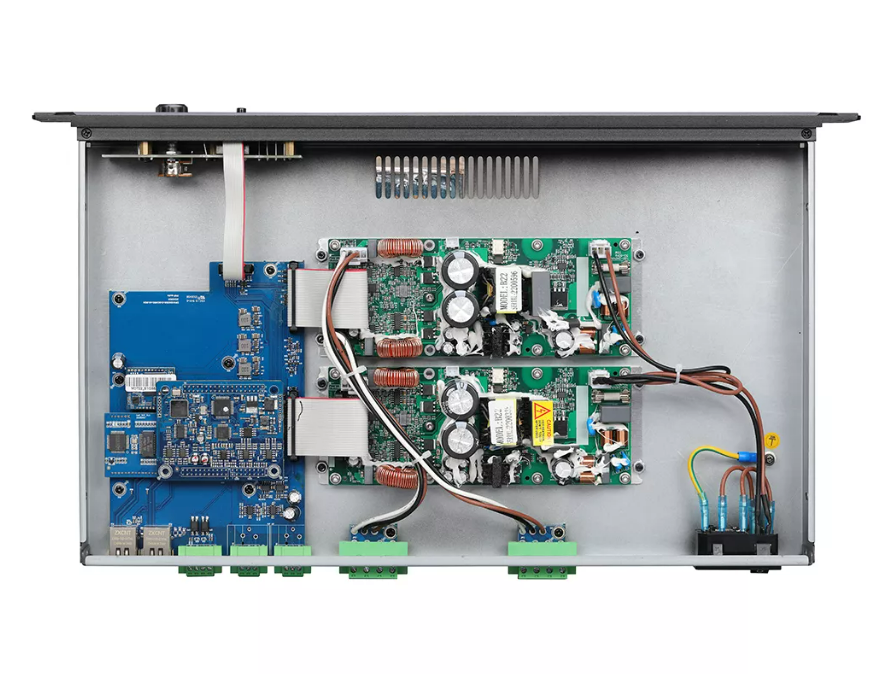
Pulse width modulation (PWM) is a technology that has significantly improved the energy efficiency of digital power amplifiers. PWM amplifiers use a switching technique to regulate the power delivered to speakers, minimizing energy loss and heat generation. This allows for more efficient use of power, particularly in high-performance systems that require high output levels. PWM technology has become a standard in modern digital amplifiers, ensuring better performance with lower energy consumption.
Trend | Description | Impact on Industry |
Intelligent Control | AI-driven systems for real-time adjustments | Enhances performance and energy efficiency |
Network Integration | Amplifiers that connect seamlessly with networks | Expands control and monitoring options |
Miniaturization | Smaller, more compact designs | Increases portability and space efficiency |
Efficiency Improvements | PWM technology, GaN and SiC semiconductors | Reduces power loss and heat generation |
Gallium nitride (GaN) and silicon carbide (SiC) are advanced semiconductor materials that are revolutionizing the power amplifier industry. These materials enable higher power densities, faster switching speeds, and reduced heat generation compared to traditional silicon-based amplifiers. GaN and SiC amplifiers are particularly valuable in applications that require high efficiency and reliability, such as telecommunications, satellite communications, and automotive systems.
Technology | Impact on Power Amplifiers |
Gallium Nitride (GaN) | Enables higher power density and reduced size |
Silicon Carbide (SiC) | Increases reliability and efficiency at smaller sizes |
Advanced Semiconductor Materials | Reduces heat generation and improves overall efficiency |
Digital signal processing (DSP) is another key advancement in digital power amplifier technology. DSP allows for real-time adjustments to the audio signal, including filtering, equalization, and dynamic range compression. This results in improved sound quality and performance in various settings, from home theaters to concert venues. By integrating DSP into digital amplifiers, manufacturers can offer users greater control over their audio experience, ensuring optimal sound quality regardless of the environment.
Digital power amplifiers have become a staple in consumer electronics, particularly in home audio systems. The shift from traditional analog amplifiers to digital designs has resulted in more compact, efficient, and cost-effective solutions for consumers. With the integration of intelligent control and network capabilities, modern digital amplifiers offer enhanced user experiences, allowing users to customize their sound and control their systems remotely.
The automotive industry has also seen significant advancements with the adoption of digital power amplifiers. As vehicles become more connected, the demand for high-performance, energy-efficient amplifiers has grown. Digital amplifiers are playing a key role in enhancing the audio experience in modern cars, providing clear, high-fidelity sound while minimizing power consumption and space requirements. Network integration further allows for seamless communication between the amplifier and other car systems.
In professional audio settings, digital power amplifiers are becoming indispensable. These amplifiers offer superior performance, energy efficiency, and flexibility for large-scale events, concerts, and studio setups. With the integration of network capabilities and intelligent control, professional audio systems can now be monitored and adjusted remotely, ensuring optimal sound quality and performance throughout the event.
Despite the many advancements in digital power amplifier technology, several challenges remain. Balancing size, power, and efficiency continues to be a complex issue, especially as demand for more powerful and compact amplifiers grows. Thermal management remains a concern in high-output systems, and ongoing innovation is necessary to address these challenges.
The future of digital power amplifiers lies in further advancements in intelligent control, energy efficiency, and miniaturization. Emerging technologies, such as quantum computing and advanced semiconductors, are expected to push the boundaries of amplifier performance. As AI-driven amplifiers become more common, we can expect even greater automation, with amplifiers that adapt to user preferences and environmental conditions in real-time.
Digital power amplifiers are evolving with intelligent control, network integration, and miniaturization leading the way. These advancements improve performance and energy efficiency while opening new doors for innovation across various industries. AUWAY’s digital power amplifiers offer energy-efficient solutions that seamlessly integrate with modern networks, enhancing audio experiences for both professional and consumer applications.
A: Digital power amplifiers use digital signal processing to amplify audio signals efficiently. They are part of the latest trends in digital power amplifier technology, improving performance, energy efficiency, and minimizing heat generation.
A: Intelligent control systems in digital power amplifiers allow real-time adjustments, optimizing sound quality, power efficiency, and heat management based on usage conditions, enhancing overall performance.
A: Network integration enables digital power amplifiers to connect seamlessly with other systems, like IoT or smart homes, offering enhanced remote control, monitoring, and streamlined setups.
A: Miniaturization allows for more compact, energy-efficient designs in digital power amplifiers, making them ideal for portable devices and improving thermal management in modern applications.
A: The latest trends in digital power amplifier technology drive the evolution of more powerful, energy-efficient, and compact audio systems, meeting the growing demand for high-performance amplification solutions.


