
Views: 0 Author: Site Editor Publish Time: 2025-11-12 Origin: Site


Class D digital power amplifiers (DPA) are transforming the audio industry. These amplifiers offer unparalleled efficiency and compactness compared to traditional linear amplifiers.
As audio systems demand more power and better performance, Class D amplifiers are the go-to solution. In this article, we will explore their core technical advantages, efficiency performance, and diverse applications. You’ll understand why Class D amplifiers are crucial in both consumer and professional audio devices.
Class D amplifiers operate using pulse-width modulation (PWM) or pulse-density modulation (PDM), two types of switching techniques that convert analog audio signals into a series of pulses.
● Pulse-Width Modulation (PWM): PWM controls the width of each pulse to represent the amplitude of the audio signal. The higher the pulse width, the louder the sound output.
● Pulse-Density Modulation (PDM): PDM works by adjusting the density of pulses to convey the audio signal. Unlike PWM, PDM offers a more uniform distribution of energy, reducing high-frequency noise.
Both methods allow Class D amplifiers to operate with far less power dissipation compared to traditional linear amplifiers. This reduction in heat generation is one of the primary reasons why Class D amplifiers are more energy-efficient and compact than other amplifier types.
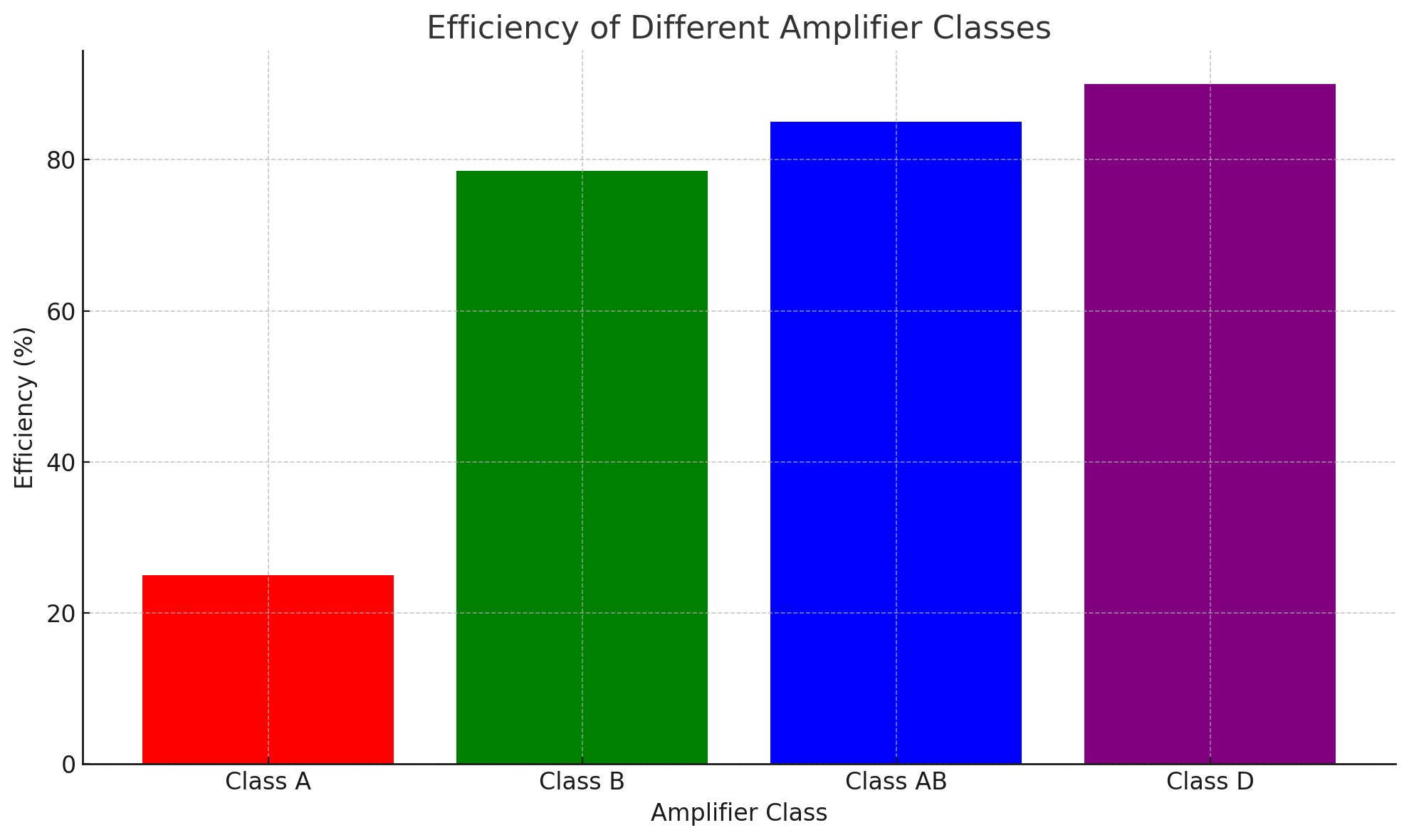
Class D amplifiers provide significant efficiency advantages over traditional amplifier classes, such as Class A, B, and AB.
● Class A Amplifiers: These amplifiers are known for high audio fidelity but suffer from poor efficiency. They continuously draw current even when the signal is not active, resulting in excessive heat generation.
● Class B and AB Amplifiers: These amplifiers mitigate some of the inefficiencies of Class A by switching transistors on and off. However, they still dissipate considerable power and generate heat.
● Class D Amplifiers: By switching output transistors on and off at high speeds, Class D amplifiers minimize the amount of time spent in the "linear region" where energy loss occurs. This results in much higher efficiency—up to 90% or more—compared to traditional amplifiers.
This efficiency translates into less heat, smaller size, and the ability to deliver more power without requiring bulky heat sinks or fans.
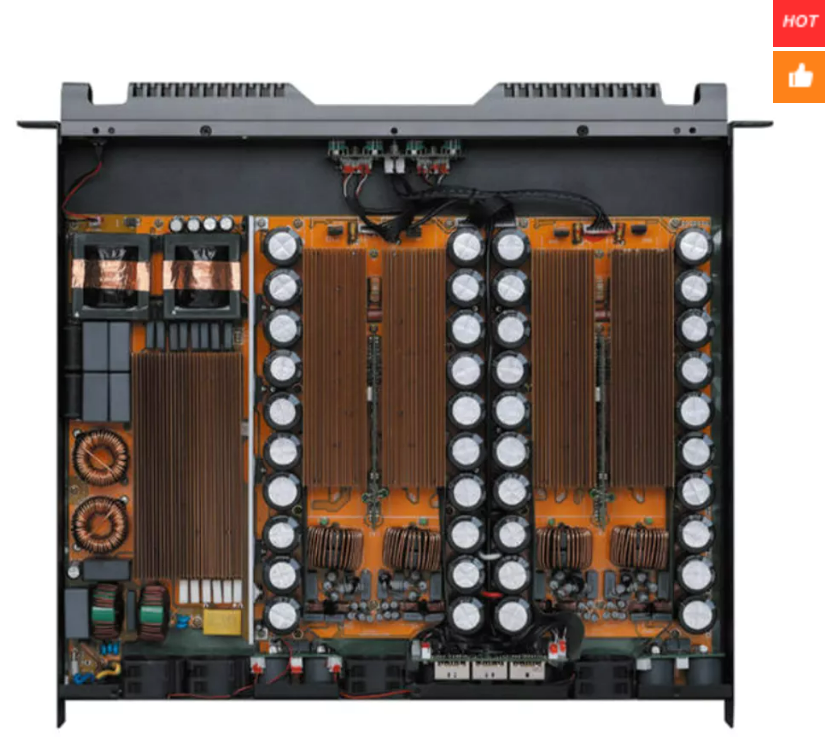
One of the standout features of Class D amplifiers is their compact design. Due to the high efficiency and low heat generation, these amplifiers do not require large, bulky components such as heat sinks, which are essential for cooling in linear amplifiers. This makes Class D amplifiers ideal for space-constrained applications, such as portable audio systems, home theaters, and automotive audio equipment.
Moreover, the low power consumption of Class D amplifiers extends the battery life in portable devices, making them an ideal choice for battery-powered audio systems.
Power dissipation is a critical factor in the performance and longevity of audio amplifiers. Class D amplifiers excel in this area by reducing the amount of energy lost as heat. Unlike linear amplifiers, where transistors operate in a continuous mode, Class D amplifiers work by switching the output transistors on and off at high frequencies. During this process, the transistors spend little time in the linear region, where most power dissipation occurs.
This switching method results in minimal heat generation, which is particularly beneficial for applications where heat management is crucial, such as in mobile audio devices, portable speakers, and automotive systems.
Class D amplifiers have evolved to offer audiophile-quality sound despite their high efficiency. Early versions of Class D amplifiers struggled with noise and distortion, which affected sound quality. However, modern advancements in modulation techniques, such as improved PWM and PDM algorithms, have significantly reduced these issues.
The ability to minimize distortion, along with careful design of the output stages and filtering systems, ensures that Class D amplifiers provide clean, clear audio. The low power loss and reduced heat also contribute to a quieter, more refined listening experience.
Class D amplifiers are not only efficient but also cost-effective. Their smaller size and lower power requirements allow manufacturers to design audio systems with fewer components and less cooling equipment. Additionally, Class D amplifiers are well-suited for integration into audio devices with digital input, eliminating the need for separate digital-to-analog converters (DACs) in many cases.
This cost-effectiveness makes Class D amplifiers particularly attractive for mass-produced consumer electronics, where minimizing both cost and size is a key consideration.
Advantage | Description |
High Efficiency | Reduces power loss, up to 90% efficiency compared to traditional amplifiers. |
Compact Size | Small form factor allows integration into tight spaces like portable devices. |
Low Heat Generation | Operates at lower temperatures, eliminating the need for bulky cooling systems. |
Cost-Effective | Lower power consumption and reduced heat management costs lead to overall savings. |
Class D amplifiers exhibit outstanding efficiency across a wide range of power outputs. Unlike linear amplifiers, which struggle with power dissipation at moderate to high output levels, Class D amplifiers maintain high efficiency even as the power output increases.
For instance, at higher output levels, where linear amplifiers experience significant losses, Class D amplifiers still operate with minimal heat dissipation, making them ideal for high-power applications such as home theater systems or car audio amplifiers.
Feature | Class D Digital Power Amplifier | Class A Amplifier | Class B Amplifier | Class AB Amplifier |
Efficiency | Up to 90% | 25% | 78.5% | 50-70% |
Heat Dissipation | Low | High | Moderate | High |
Size | Compact | Large | Medium | Medium |
Power Consumption | Low | High | Moderate | Moderate |
Sound Quality | High, with minimal distortion | High | Moderate | Good |
Application | Home, automotive, professional | High-end audio | Mid-range audio | Consumer audio |
In high-power applications, thermal management is critical. While Class D amplifiers produce much less heat than traditional amplifiers, they still require careful design to handle high power levels efficiently. Advances in cooling techniques, such as advanced heat sinks and thermal coupling, allow Class D amplifiers to perform at their best in demanding environments.
These solutions ensure that Class D amplifiers maintain consistent performance without the risk of overheating, even in professional audio applications.
The efficiency of Class D amplifiers is a game-changer for battery-powered audio devices. By consuming less power, Class D amplifiers extend battery life in portable devices such as smartphones, wireless speakers, and Bluetooth audio systems. The ability to operate with minimal power draw allows these devices to deliver longer playtime without frequent recharging.
This energy efficiency makes Class D amplifiers the preferred choice for portable audio applications where power conservation is a priority.
Class D amplifiers have become a staple in home audio systems, including soundbars, home theaters, and portable speakers. Their compact size, high efficiency, and ability to produce clear, powerful sound make them ideal for consumer audio devices.
Additionally, the integration of Class D amplifiers with digital audio processing technology has led to the development of smart speakers and wireless audio systems, further expanding their reach in the consumer electronics market.
Automotive audio systems are another key application for Class D amplifiers. In cars, space and power efficiency are essential, and Class D amplifiers provide a compact solution without sacrificing performance. These amplifiers deliver powerful sound output while consuming less power, making them ideal for modern car audio systems, where high performance and low power consumption are crucial.
In professional audio environments, such as live sound reinforcement and studio equipment, Class D amplifiers offer reliable, high-quality performance. Their ability to handle high power levels with minimal heat dissipation is particularly beneficial in situations where space and cooling options are limited.
For instance, Class D amplifiers are used in PA systems, concert amplifiers, and other professional audio applications where both efficiency and sound quality are essential.
Class D amplifiers are also well-suited for wireless and Bluetooth audio systems. The integration of Class D technology into wireless speakers and Bluetooth audio devices allows for high-efficiency amplification in portable and wireless formats, enhancing the overall user experience.
Application Area | Benefits of Class D Amplifiers | Examples of Use |
Home Audio Systems | Compact, energy-efficient, clear sound | Soundbars, Home theater systems |
Automotive Audio | Small size, low power consumption, high output | Car audio systems |
Professional Audio Equipment | Handles high power loads efficiently, minimal heat dissipation | PA systems, Concert amplifiers |
Wireless and Bluetooth Systems | Energy-efficient for battery-powered devices, compact design | Bluetooth speakers, wireless sound systems |
One of the challenges of Class D amplifiers is the potential for electromagnetic interference (EMI) due to the high-frequency switching nature of the technology. However, various design techniques, such as using low-pass filters and shielding, help minimize EMI and ensure that the amplifier operates smoothly without causing interference with other electronic devices.
Early Class D amplifiers faced criticism for poor sound quality due to distortion and noise. However, recent advancements in modulation techniques and feedback loops have greatly improved the audio performance of Class D amplifiers. By reducing distortion and enhancing noise rejection, modern Class D amplifiers deliver audiophile-quality sound.
While Class D amplifiers offer numerous advantages, designing high-quality Class D amplifiers can be more complex than traditional linear amplifiers. The need for precise timing, advanced modulation techniques, and effective feedback loops requires careful engineering to achieve optimal performance.
Class D amplifiers are becoming increasingly integrated with digital audio systems. This trend is driven by advancements in digital control and processing technologies, which enable more efficient and versatile Class D amplifiers. This integration is particularly beneficial in applications such as smart speakers, where digital audio processing and amplification can be seamlessly combined.
The future of Class D amplification will be shaped by advancements in materials and components, such as the use of Gallium Nitride (GaN) semiconductors. These materials offer superior performance, higher efficiency, and lower heat dissipation compared to traditional silicon-based components, opening up new possibilities for Class D amplifier designs.
Class D amplifiers are naturally aligned with sustainability goals due to their high efficiency and low power consumption. As the demand for eco-friendly electronic products grows, Class D amplifiers will continue to play a crucial role in reducing energy consumption and minimizing environmental impact.
Class D digital power amplifiers have transformed the audio industry with their efficiency, compact size, and excellent sound quality. Their technical advantages make them perfect for both consumer and professional audio applications. As technology advances, Class D amplifiers will continue to lead innovation, offering efficient, powerful, and sustainable solutions. AUWAY’s products exemplify these qualities, providing reliable, high-performance amplifiers for a range of applications, ensuring exceptional value for customers.
A: A Class D Digital Power Amplifier uses switching technology, converting analog signals into pulse signals for efficient amplification with minimal heat generation.
A: Unlike Class A, B, and AB amplifiers, Class D amplifiers offer higher efficiency, reduced power dissipation, and less heat production by using switching transistors.
A: Class D amplifiers provide high efficiency, compact size, and exceptional sound quality, making them ideal for a wide range of audio applications.
A: Their low power consumption and compact design make Class D amplifiers perfect for battery-powered and space-constrained audio devices.
A: Class D amplifiers can achieve efficiency levels of up to 90%, reducing heat dissipation and making them more energy-efficient than linear amplifiers.
A: Class D amplifiers deliver powerful, clear audio with minimal heat generation, making them suitable for high-performance applications like PA systems and concert amplifiers.


