
Views: 0 Author: Site Editor Publish Time: 2025-11-12 Origin: Site


Selecting the right amplifier is crucial for high-quality live sound. But what makes an amplifier truly suitable for live events? From ensuring clear, powerful sound to preventing overheating, choosing the correct amplifier is key. In this article, you’ll learn how to select and debug Digital Power Amplifiers, Power Amplifiers for Live Sound Reinforcement for optimal performance in any setting.
When selecting a power amplifier for live sound reinforcement, understanding power output and impedance matching is essential. Power output refers to the amplifier’s ability to drive speakers at a specific power level, usually measured in watts. The power rating of the amplifier should match or exceed the requirements of the speakers to avoid distortion or speaker damage. Additionally, impedance matching between the amplifier and speakers is crucial. Most professional speakers have an impedance of 4Ω, 8Ω, or 16Ω, and using an amplifier that matches these values ensures maximum efficiency and protects both the amplifier and speakers from potential damage.
Impedance mismatches can result in the amplifier overheating or triggering its protection mechanisms, leading to system failure. For instance, when connecting multiple speakers to a single amplifier, the total impedance decreases, which could result in more power being drawn than the amplifier can safely provide. It's vital to calculate the correct load impedance when planning speaker setups to prevent performance issues.
Factor | Description |
Output Power | Determine the amplifier's power capacity to match speaker and venue needs. |
Impedance Matching | Ensure the amplifier's impedance matches the speakers to avoid damage. |
Amplifier Class | Class D amplifiers are preferred for efficiency in live sound applications. |
The decision between digital and analog amplifiers comes down to efficiency, weight, and performance. Digital power amplifiers, like Class D amplifiers, are known for their high efficiency and compact design. They use pulse-width modulation (PWM) to convert analog signals into digital ones, leading to lower heat generation and better energy efficiency compared to traditional analog amplifiers. For live sound reinforcement, especially in large venues, Class D amplifiers are the preferred choice due to their ability to provide high output power while maintaining compact size.
On the other hand, analog amplifiers are still appreciated in certain scenarios for their warm sound and simplicity, but they are typically less efficient, bulkier, and generate more heat. While analog amplifiers can be ideal for high-end studio applications or smaller venues where power and space are less of a concern, digital amplifiers are the go-to option for most live sound reinforcement applications, particularly in high-power setups.
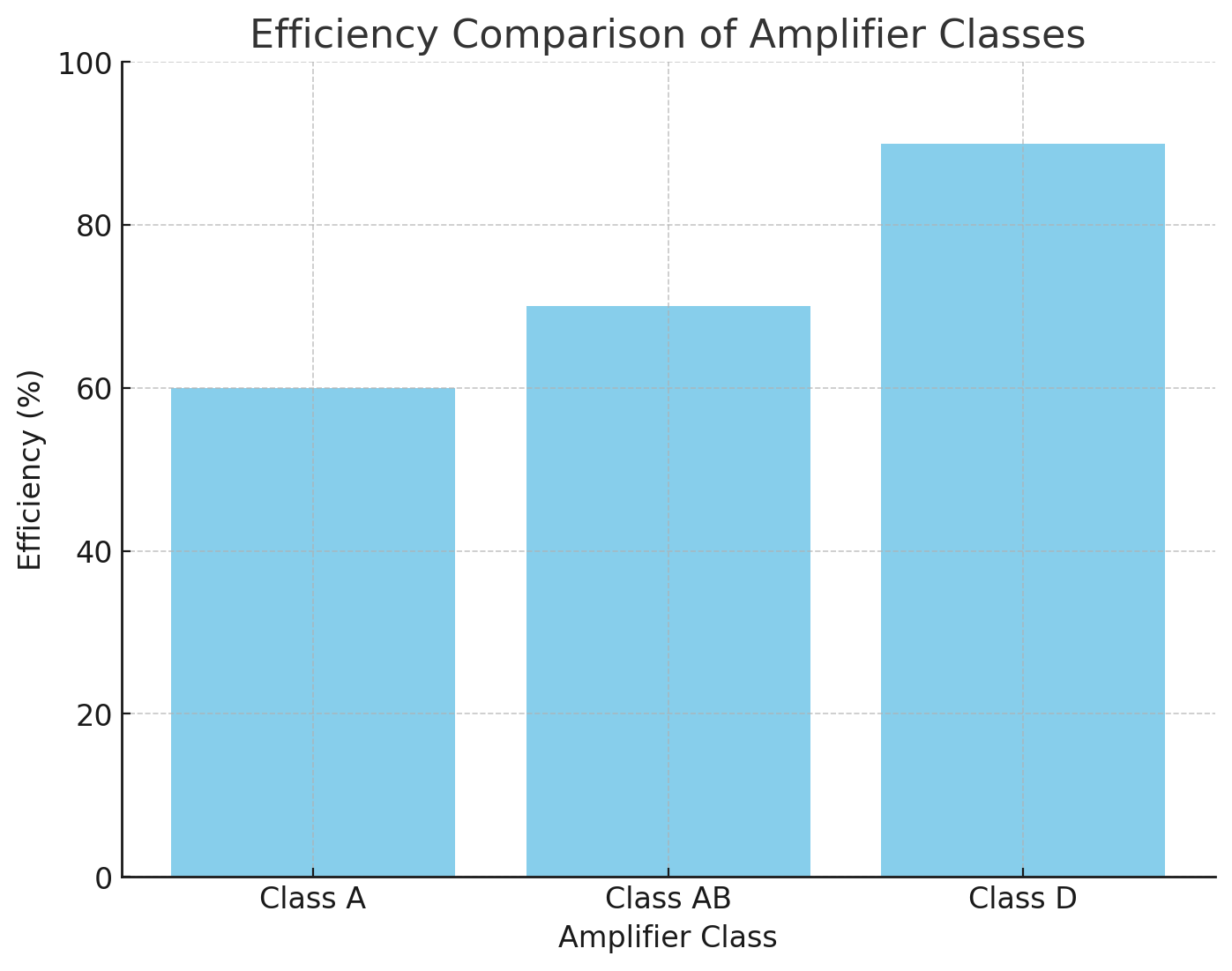
Amplifiers come in several classes, each offering distinct advantages. Class A amplifiers are known for their excellent sound quality but are inefficient, producing a lot of heat and consuming more power. They are mostly used in high-end audio systems where sound fidelity is the top priority.
Class AB amplifiers, on the other hand, offer a balance between sound quality and efficiency. They are more energy-efficient than Class A amplifiers and are commonly used in both studio and live sound applications. However, they still produce more heat than digital amplifiers.
Class D amplifiers, also known as switching amplifiers, offer the best efficiency and are most commonly used for live sound reinforcement. They can deliver substantial power with minimal heat production, making them ideal for large-scale events where efficiency and compactness are important. Class D amplifiers can easily provide thousands of watts per channel in a small, lightweight form factor, reducing the need for bulky cooling systems.
Class | Efficiency | Heat Generation | Ideal Use Case |
Class A | Low | High | High-fidelity audio applications (not ideal for live sound). |
Class AB | Moderate | Moderate | General-purpose amplification, balancing quality and power. |
Class D | High | Low | Live sound reinforcement, portable systems, and subwoofers. |
When dealing with live sound amplifiers, several common issues can arise, such as distortion, overheating, and connectivity problems. Distortion can occur if the amplifier is driven beyond its power rating, resulting in poor sound quality. Overheating can happen if the amplifier is not adequately cooled or if it’s pushed to work at high levels for prolonged periods. Connectivity problems often stem from faulty cables, loose connections, or compatibility issues between the amplifier and other system components.
To solve these issues, regular maintenance and troubleshooting are essential. Ensure that all cables and connections are secure, and use appropriate cables to avoid signal degradation. In case of distortion or overheating, check the power ratings and ensure that the amplifier is not being overdriven. It’s also essential to monitor the amplifier’s temperature during use and employ cooling fans if necessary.
Issue | Possible Cause | Solution |
Distortion | Overdriven signal or faulty connections | Check signal levels and connections, adjust EQ. |
Overheating | Insufficient ventilation or overuse | Ensure proper cooling and use thermal protection. |
Connectivity Problems | Loose cables or impedance mismatch | Check connections and match impedance properly. |
Real-time monitoring tools are invaluable when troubleshooting amplifiers during live performances. Tools like oscilloscopes, signal generators, and dedicated amplifier testing software can help identify issues such as distortion, clipping, or poor signal integrity. By monitoring the input and output signals, sound engineers can detect potential problems early and make adjustments before they affect the performance.
For example, oscilloscopes can help visualize waveform distortions, while signal generators allow engineers to test the amplifier’s response to different frequencies. Using these tools helps ensure that the amplifier is performing optimally, providing the best sound quality for the audience.
Protecting your amplifier from damage is crucial, especially in high-demand live settings. Many modern amplifiers come with built-in protection features, such as thermal protection, short-circuit protection, and overload circuits. These features help prevent the amplifier from being damaged during extended use or when faced with power surges or load mismatches.
However, it’s also essential to implement additional protective measures, such as using proper cooling systems or choosing amplifiers with adequate ventilation. In large venues, using multiple smaller amplifiers in place of a single high-power unit can help distribute the load and reduce the risk of overheating.
Choosing the right amplifier for large-scale events like concerts and festivals is a complex process. In these scenarios, amplifiers need to handle high power output to drive large speaker arrays, often in open-air environments. The amplifier must not only provide the necessary SPL to cover vast areas but also do so without distorting the sound or overheating.
For example, at a major music festival, a sound system might include multiple arrays of line-array speakers and subwoofers, each driven by a dedicated amplifier. The amplifiers chosen for such setups are typically Class D digital power amplifiers, as they can deliver high power while remaining compact and efficient. They are paired with advanced digital signal processing (DSP) to adjust sound characteristics to suit the environment.
In corporate events and public address systems, the focus is on clarity and even sound distribution. The amplifier’s job is to ensure that speech is clear and audible to all attendees, regardless of their position in the venue. In these cases, a combination of digital power amplifiers and distributed audio systems is often used.
For instance, a corporate conference might use a setup with multiple speakers placed throughout the venue. Each speaker is powered by a dedicated amplifier, often with a lower wattage than those used in concerts. The emphasis here is on precise sound control, where amplifiers with DSP functions allow for customized frequency adjustments to ensure speech clarity.
Touring and rental companies require durable, versatile amplifiers that can withstand transportation and setup in various venues. These amplifiers need to be lightweight yet powerful, offering ease of transport without compromising on performance. Rental companies often select amplifiers that are modular and can be easily integrated into different sound systems.
For example, a touring company might use multi-channel amplifiers, allowing them to power multiple speaker systems with a single unit. This not only saves space but also simplifies setup. Additionally, rental companies may choose amplifiers with built-in DSP to offer more flexibility in configuring sound systems for different events.
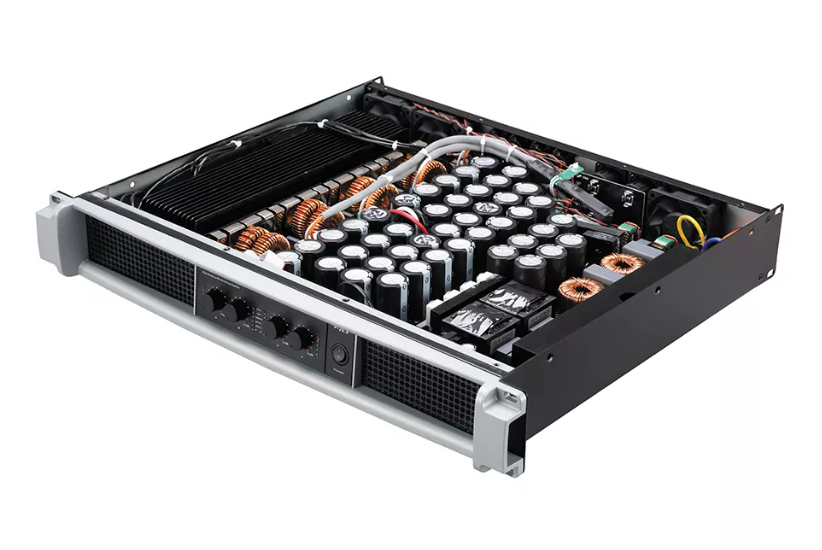
Many modern professional amplifiers now come equipped with Digital Signal Processing (DSP), which provides precise control over the audio signal. DSP allows sound engineers to make real-time adjustments to the frequency response, compression, equalization, and other sound characteristics. This is particularly beneficial in live sound environments, where audio conditions can change rapidly.
By integrating DSP into power amplifiers, manufacturers can offer advanced features like speaker presets, dynamic range control, and delay compensation, improving sound quality and reducing the risk of distortion or feedback. DSP-equipped amplifiers also simplify system management by allowing remote control and monitoring, making them ideal for large-scale events.
Feature | Description | Benefits |
Digital Signal Processing (DSP) | Onboard processing for equalization, compression, and delay adjustments. | Enhances sound quality and offers more control. |
Remote Control | Ethernet, Dante, or Wi-Fi-enabled features for real-time adjustments. | Allows remote control of amplifiers in large setups. |
Efficient Heat Management | Advanced cooling systems to prevent overheating. | Ensures stable performance, even in demanding conditions. |
Modern professional amplifiers often feature advanced connectivity options such as Ethernet ports, Wi-Fi, and Dante networking for remote control. These features are invaluable for large live sound setups where real-time adjustments are crucial. Through software, sound engineers can remotely adjust settings, monitor amplifier performance, and configure speaker setups, all from a central location.
The ability to control amplifiers remotely ensures that the system can be adjusted to suit changing conditions during a live performance, whether that involves adjusting the volume, fine-tuning the EQ, or addressing technical issues without leaving the sound desk.
Power amplifiers, especially in live sound applications, need to manage heat effectively. High-power amplifiers are prone to overheating, which can lead to performance degradation or even failure. Amplifiers with high efficiency, such as Class D designs, reduce the amount of heat generated, allowing them to operate at higher power levels without the need for extensive cooling systems.
In large venues, amplifiers with advanced cooling systems, such as fan-assisted or convection cooling, are essential to maintaining stable performance. These systems ensure that the amplifier does not overheat, especially during extended live performances.
When selecting power amplifiers for live sound reinforcement, key factors like output power, impedance matching, and amplifier class must be considered. Understanding the venue and system requirements is essential for optimal performance. High-quality amplifiers ensure clear, powerful sound and system reliability. AUWAY offers a range of digital power amplifiers that combine power, efficiency, and advanced features, making them ideal for professional sound systems.
A: A Digital Power Amplifier is an efficient amplifier that uses digital processing to amplify audio signals, offering high efficiency and reduced heat generation, ideal for live sound reinforcement.
A: Consider factors like output power, impedance matching, and amplifier class. A Digital Power Amplifier is often a great choice for high-efficiency, compact live sound setups.
A: Class D amplifiers are highly efficient, produce less heat, and provide high output power, making them perfect for live sound applications that require portability and reliability.
A: Common amplifier issues include distortion and overheating. Use tools like oscilloscopes and real-time monitoring to identify and fix problems during live performances.
A: Impedance matching ensures optimal power delivery between the amplifier and speakers, preventing damage and maximizing efficiency for better sound quality.
A: Yes, Digital Power Amplifiers provide high output power and efficiency, making them ideal for large-scale events like concerts and festivals, where sound clarity and volume are crucial.


