
Views: 0 Author: Site Editor Publish Time: 2025-12-30 Origin: Site


When you attend a concert or sit in a high-end theater, the sound hits you physically. The bass resonates in your chest, and the vocals cut through the air with crystal clarity. While the speakers get most of the visual attention, the real heavy lifting happens behind the scenes in the rack. This is the domain of the power amplifier.
For audio professionals and venue managers, selecting the right amplification is a balancing act between raw power, clarity, and reliability. Among the various specifications available, the High-Power 1300W Amplifier has emerged as a versatile standard for professional setups. But what exactly does this rating mean for your sound system, and why is the underlying technology—specifically transformer-based designs—so critical?
This guide breaks down the mechanics of high-power amplification and explores why rugged engineering is essential for consistent performance.
At its core, an amplifier’s job is to take a weak electrical signal from a mixing console and boost it enough to move the cones of a loudspeaker. A High-Power 1300W Amplifier is designed to deliver 1300 watts of power, typically measured per channel at a specific impedance (usually 4 or 8 ohms).
While 1300 watts might sound like overkill for a home setup, in a professional environment, this level of power provides "headroom." Headroom is the safety zone that allows an amplifier to handle sudden, loud bursts of sound—like a drum kick or an orchestral crescendo—without distorting.
An amplifier in this class ensures that even when the volume is pushed, the signal remains clean. It prevents "clipping," a phenomenon where the amplifier runs out of power and cuts off the tops of the sound waves, which can damage speakers and ruin the listening experience.
Not all amplifiers create power in the same way. In the world of professional audio, the debate often centers on the power supply technology. This is where the Auway Audio’s Transformer Amplifier distinguishes itself.
A Transformer Amplifier relies on a large, heavy copper transformer to regulate the flow of electricity from the wall outlet to the amplifier's internal components. This traditional yet highly effective design offers several distinct advantages over newer, lightweight digital power supplies:
Transformers act as a massive energy reservoir. When a song demands a sudden surge of bass, the transformer can deliver that current instantly. This results in a sound that feels "full" and grounded, particularly in the lower frequencies.
Electrical noise and interference are the enemies of clear audio. High-quality transformers naturally filter out noise from the power line, ensuring that the only thing coming out of your speakers is the music.
By regulating power flow with precision, transformer-based amps minimize harmonic distortion. This ensures smooth signal reproduction across the entire frequency spectrum, from the crispest highs to the deepest, most resonant lows.
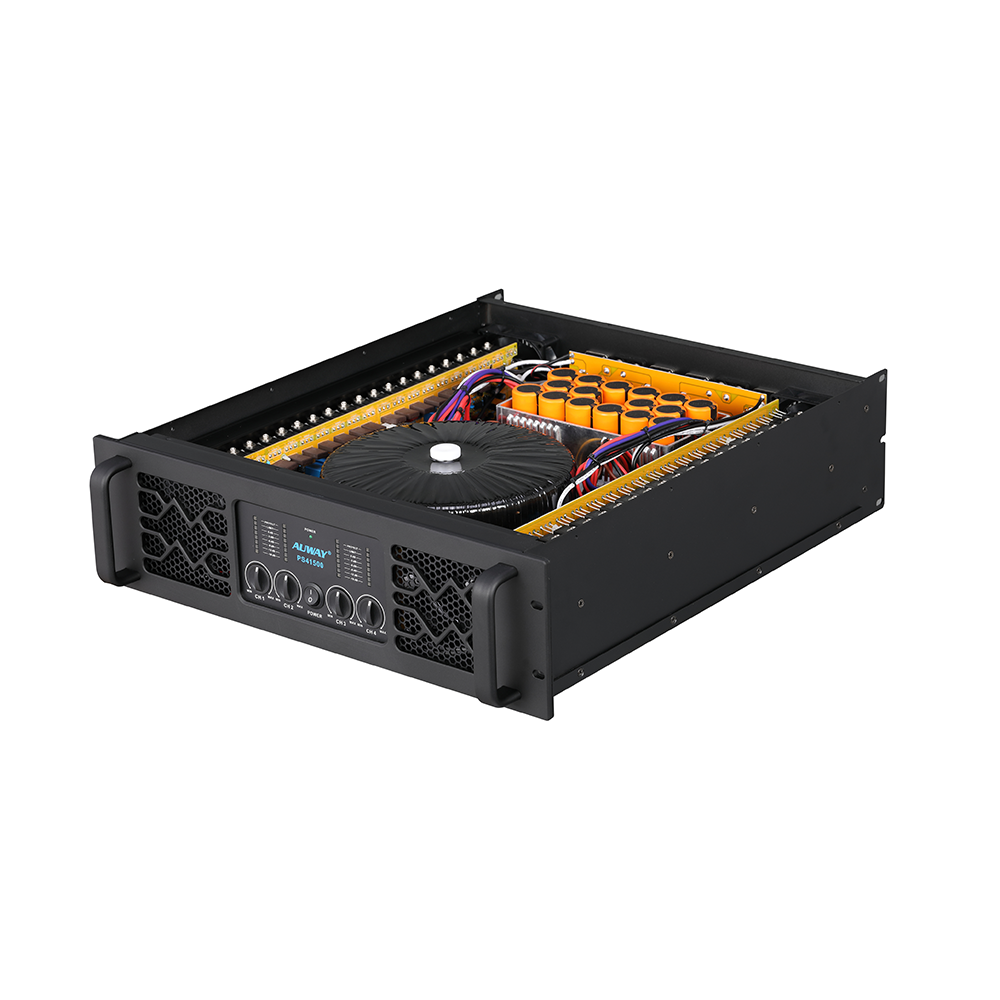
Live environments are brutal on electronic equipment. A touring rig or a permanent stage setup runs for hours on end, often at high volumes. A 1300W Amplifier for Stages is built specifically to withstand these rigors.
Unlike consumer gear, these amplifiers are housed in rugged chassis designed to resist vibration and impact during transport. They are engineered for 24/7 operation, meaning they can handle the heat generated during a long festival or a marathon conference without shutting down.
For a stage manager, reliability is just as important as sound quality. If an amp fails mid-show, the silence is deafening. Using a robust 1300W unit ensures that the show goes on, regardless of the environmental conditions.
When evaluating a High-Power 1300W Amplifier, look beyond the wattage number on the box. The build quality and internal safety features determine the unit's true value.
Top-tier amplifiers, such as those from Auway Audio, integrate sophisticated protection mechanisms. These circuits guard against:
Overload: Prevents the amp from drawing more current than it can handle.
Short Circuits: Protects the internal components if speaker wires touch.
Voltage Spikes: Shields the unit from inconsistent power sources, which is common in older venues or outdoor generators.
Professional environments rarely have a "standard" setup. A high-quality amplifier offers flexible input and output configurations, allowing it to interface seamlessly with diverse speaker systems, mixing consoles, and public address networks.
While these units produce massive power, modern engineering allows for a balance between performance and energy consumption. High-efficiency designs reduce electricity costs for permanent installations and lower the heat output, which extends the lifespan of the internal components.
The versatility of a 1300W transformer amplifier makes it a go-to solution for various audio landscapes.
In these spaces, clarity is king. The amplifier must reproduce the whisper of an actor and the boom of a soundtrack with equal fidelity. The low distortion of transformer-based amps is ideal here.
Live music requires dynamic range. The amplifier needs the power to drive large subwoofers and line arrays to cover the entire audience area without losing impact at the back of the room.
Shopping malls, airports, and large corporate offices use distributed audio systems for background music and paging. These systems often run continuously, requiring the durability and thermal management that professional high-power amps provide.
Choosing the right amplifier is about more than just volume; it is about control, clarity, and reliability. A High-Power 1300W Amplifier serves as the heartbeat of a professional sound system, providing the energy necessary to bring audio to life. By opting for transformer-based technology, audio professionals ensure that their systems are backed by stability and durability, ready to perform night after night.
Whether you are upgrading a venue or building a touring rig, investing in quality amplification is the most effective way to guarantee your audience hears every note exactly as it was intended.


